Serving families with care since 1968.


Available 24 Hours a Day, 7 Days a Week

123 Main Street, New York, NY 10001

Add Your Heading Text Here

Frequently Asked Questions

We understand that people often have questions before they feel ready to make a call. Below are some of the most common questions families ask us. If you are unsure about anything, please contact us and we will guide you gently through the next step.

Are you available at all times?

Yes. We are available 24 hours a day, 7 days a week. If someone has died, or if you need urgent guidance, you can call us at any time.

The first steps depend on where the death has occurred — at home, in hospital, in a nursing home, or suddenly. In most cases, a doctor must confirm the death before funeral arrangements can begin. Once this has happened, you can contact us and we will explain what needs to happen next.

Yes. We can help with the funeral arrangements, removal, notices, church or ceremony arrangements, burial or cremation, flowers, music, transport, and practical guidance for the family.

No. Many families contact us before they know what kind of funeral they would like. We can talk through the options clearly and help you make decisions at your own pace.

Yes. We can help arrange traditional religious funerals, non-religious ceremonies, humanist services, civil celebrant-led services, private funerals, direct cremations, and more personalised celebrations of life.

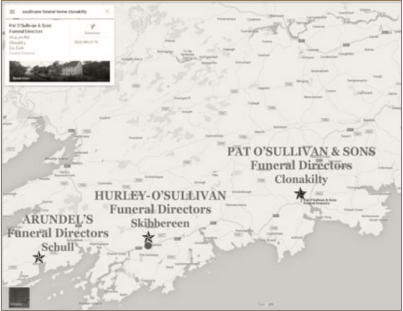
Yes. We regularly help families where relatives are living away from West Cork or abroad. We can keep family members informed, help with notices and arrangements, and support the process when a loved one needs to be transported to or from another country.

Yes. We can guide you through the available options and provide a catalogue if you would like to review them privately with your family.

The cost depends on the type of funeral, the services chosen, and any third-party costs such as cemetery, crematorium, church, celebrant, flowers, notices, or transport. We will explain costs clearly and provide guidance before decisions are made.

Yes. Planning ahead can give peace of mind and make things easier for loved ones in the future. We can arrange a private conversation to discuss wishes, options, and practical considerations.

Frequently Asked Questions — Planning Ahead

Can I plan my own funeral in advance?

Yes. Planning ahead allows you to record your wishes and make things easier for your family in the future.

No. You can record general wishes or discuss specific details. Some people know exactly what they want, while others simply want to begin the conversation.

You may wish to consider burial or cremation, type of service, music, readings, flowers, coffin or urn preferences, family wishes, and financial guidance.

Yes. We can explain likely costs and the choices that may affect them.

That is your choice. Some people prefer to speak privately first, while others involve family members from the beginning.

Yes. Funeral wishes can be updated if your circumstances or preferences change.

To begin planning ahead, contact us to arrange a private conversation.

Frequently Asked Questions — Funerals and Notices

What is a death notice?

A death notice informs family, friends, neighbours, and the wider community that someone has died. It usually includes funeral arrangements and family information.

A notice may include the person’s name, where they were from, date of death, family details, reposing arrangements, funeral Mass or service, burial or cremation details, and any family requests.

Yes, where available and appropriate.

Yes. Notices can include wishes such as “house private”, “family flowers only”, donation requests, or private funeral arrangements.

In many cases, yes. If arrangements change or further details are confirmed, the notice can be updated.

Visitors can leave a condolence message through the notice page if this option is available.

Where a private condolence option is available, visitors can choose to send a private message to the family.

If you need help preparing a death notice, we will guide you through the wording.

Frequently Asked Questions — When Someone Dies

What should I do if someone dies at home?

You should contact the doctor or out-of-hours medical service so the death can be confirmed. Once this has happened, you can contact us and we will guide you through the next steps.

The hospital staff will guide you through the immediate medical steps. You can then contact us to begin funeral arrangements.

The nursing home staff will usually contact the doctor and guide the family through the first steps. You can then contact us for funeral arrangements.

If a death is sudden or unexpected, additional procedures may be required. We can explain what this means and guide the family once the relevant authorities have been contacted.

You can call us as soon as you feel ready. If you are unsure what to do, we are available to guide you.

We may ask for the person’s name, where they have died, the next of kin, and whether any wishes are known. You do not need to have all the answers before calling.

If someone has died and you are unsure what to do, please call us. We are available 24 hours a day.

Frequently Asked Questions — The Funeral Process

What happens after we contact the funeral home?

We will ask a few gentle questions, explain the immediate next steps, and arrange to bring your loved one into our care when appropriate.

This depends on the circumstances, family wishes, availability of the church or ceremony location, cemetery or crematorium arrangements, and whether family members need time to travel.

A funeral service may take place in a church, funeral home, crematorium, family home, graveside, or another suitable location, depending on the type of funeral and family wishes.

Yes. Music, hymns, readings, poems, prayers, and personal reflections can usually be included, depending on the type of service.

Yes, where appropriate. Family members or friends may wish to read, share memories, or take part in the service.

In many cases, yes. This can be helpful for family and friends who cannot attend in person.

After the service, burial or cremation may take place. Some families also choose to gather afterwards for refreshments, a meal, or time together.